AI Model Selection: Powerful Guide for Smart Business AI
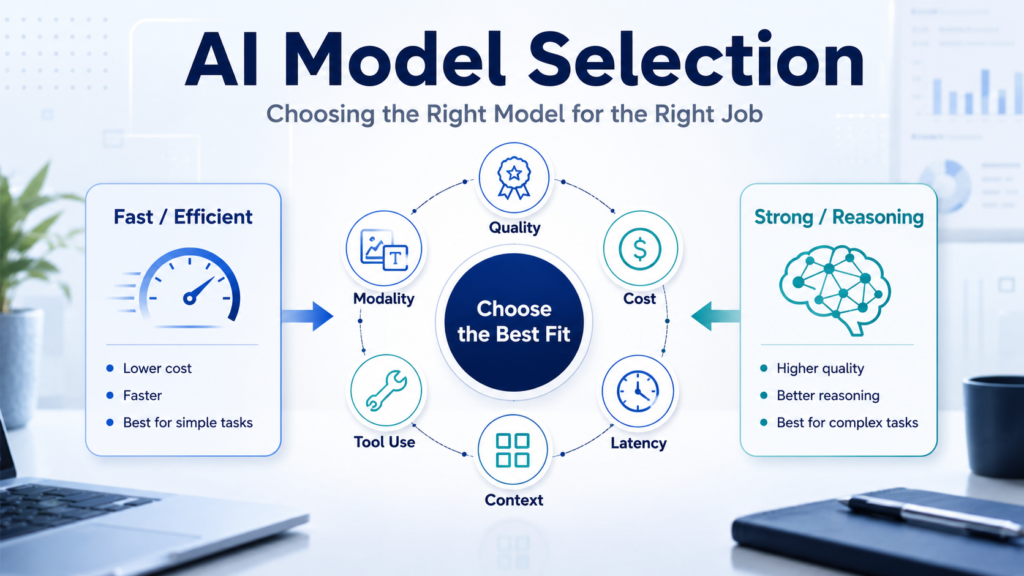
AI model selection decision framework for business AI workflows comparing quality, cost, latency, and risk

Choosing an AI model is not about picking the biggest or newest option. This lesson teaches a practical model-selection framework for business AI workflows, including task fit, cost, latency, risk, context, evaluation, and when stronger models are actually justified.

Read more

Structured Outputs for AI Workflows: Reliable Guide

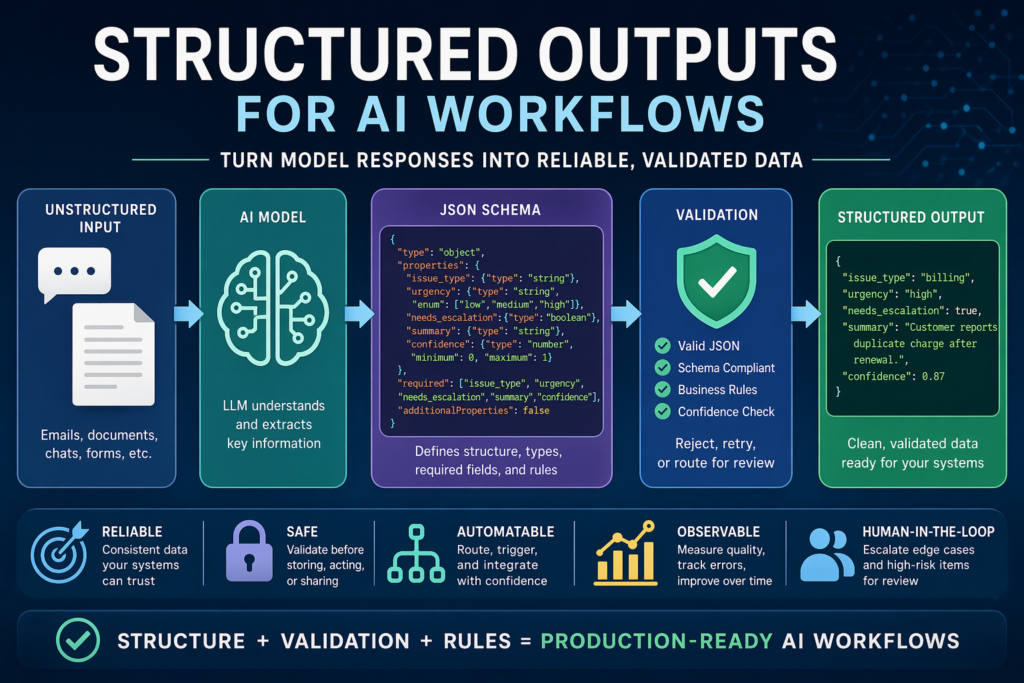
Structured outputs for AI workflows shown as JSON Schema, validation checks, and business system routing

Structured outputs for AI workflows help turn free-form model responses into validated, machine-readable data. This lesson explains how JSON Schema, validation, retries, and business rules make AI systems far more reliable in production.

Read more

Production Prompting: Essential Business AI Guide

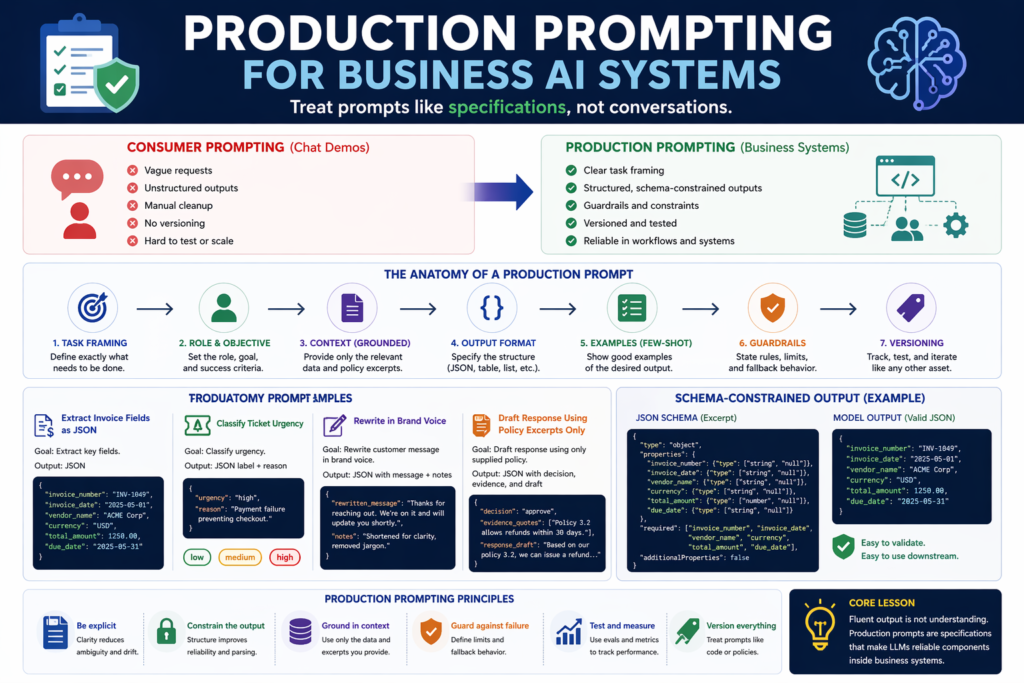
Diagram of production prompting for business AI with schema-constrained outputs and guardrails

This lesson explains why production prompting is different from consumer chat prompting. It shows how to design prompts as operational specifications with explicit tasks, grounded context, structured outputs, guardrails, examples, and version control so business AI systems behave more reliably in production.

Read more

How LLMs Work: Essential Guide for Builders

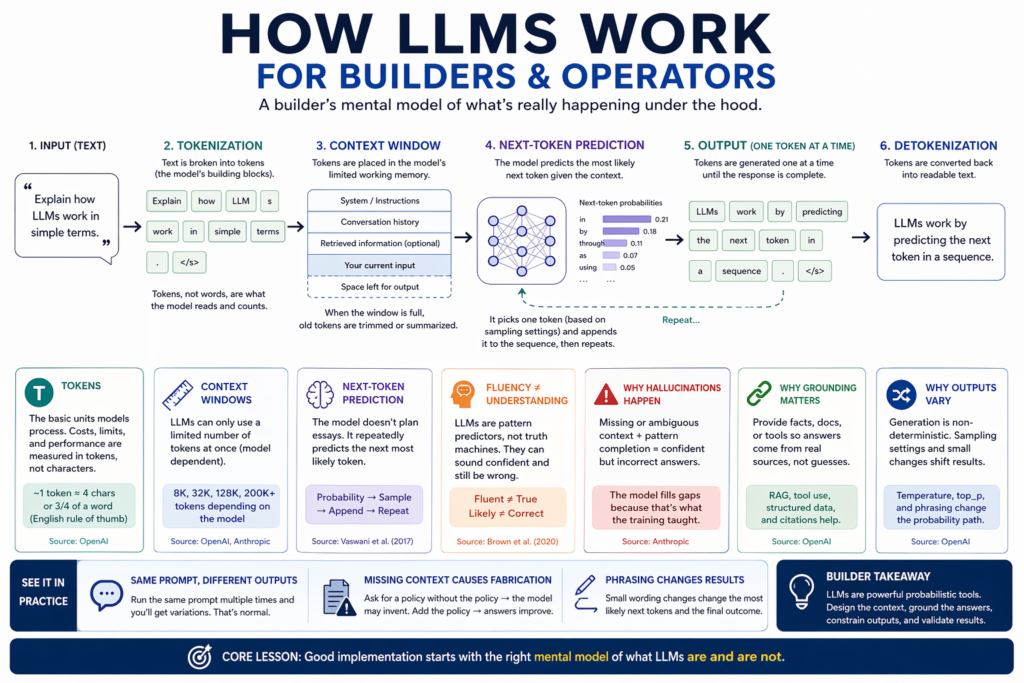
Diagram explaining how LLMs work for builders with tokens, context windows, and grounding

This lesson explains how LLMs work well enough for builders and operators to design better prompts, retrieval, validation, and workflows. It covers tokens, context windows, next-token prediction, hallucinations, grounding, and output variability with practical examples and API-oriented code.

Read more

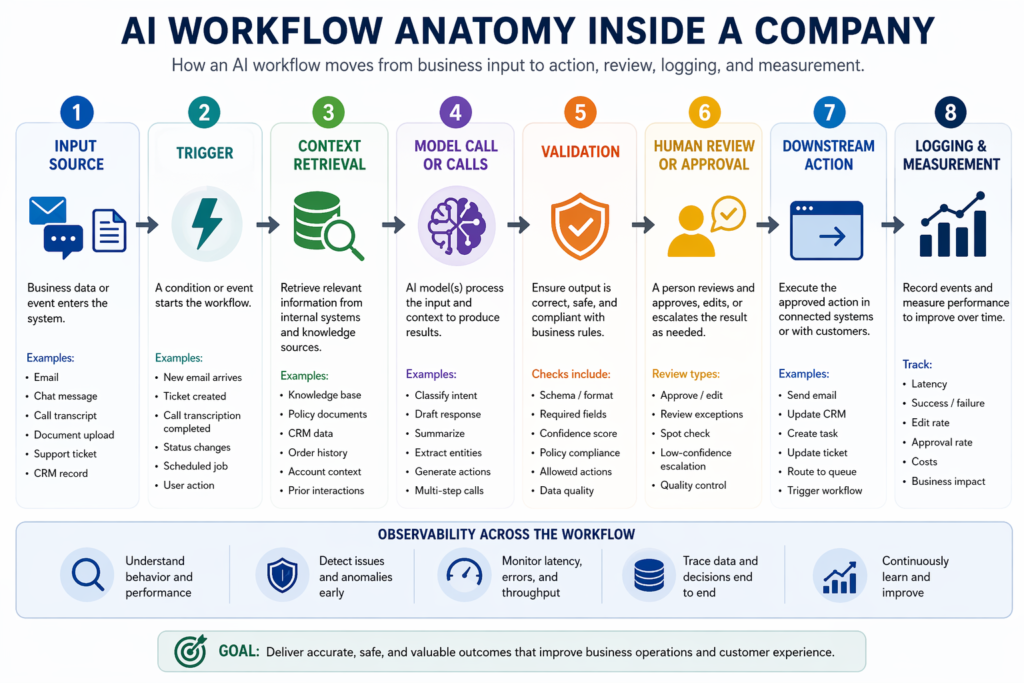
AI Workflow Anatomy: Essential Guide for Business

Diagram showing the anatomy of an AI workflow inside a business system

This lesson explains how an AI workflow actually operates inside a company. Instead of treating AI as a chatbot sitting off to the side, it breaks the system into inputs, triggers, retrieval, model calls, validation, human review, downstream actions, and measurement so teams can design workflows that are useful, controllable, and worth operating.

Read more

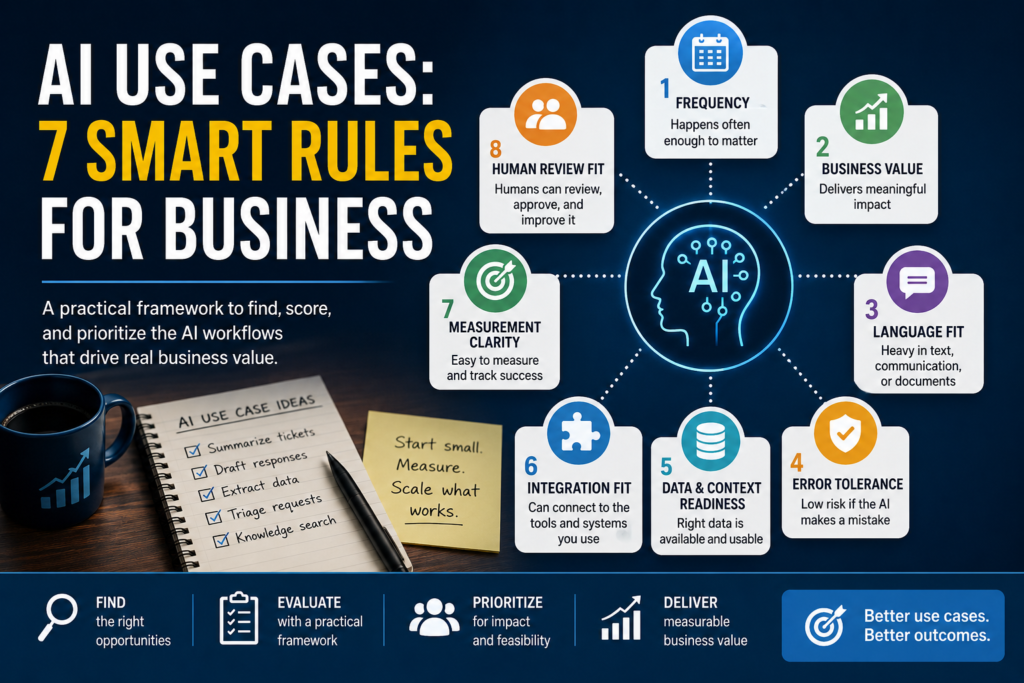
AI Use Cases: 7 Smart Rules for Business

Infographic showing seven smart rules for evaluating AI use cases in business, including frequency, business value, language fit, error tolerance, data readiness, integration fit, and measurement clarity.

Lesson Identifying AI use cases in business environments. Learning Objectives Prerequisites No coding is required to understand this lesson. Helpful background: AI use cases…

Read more

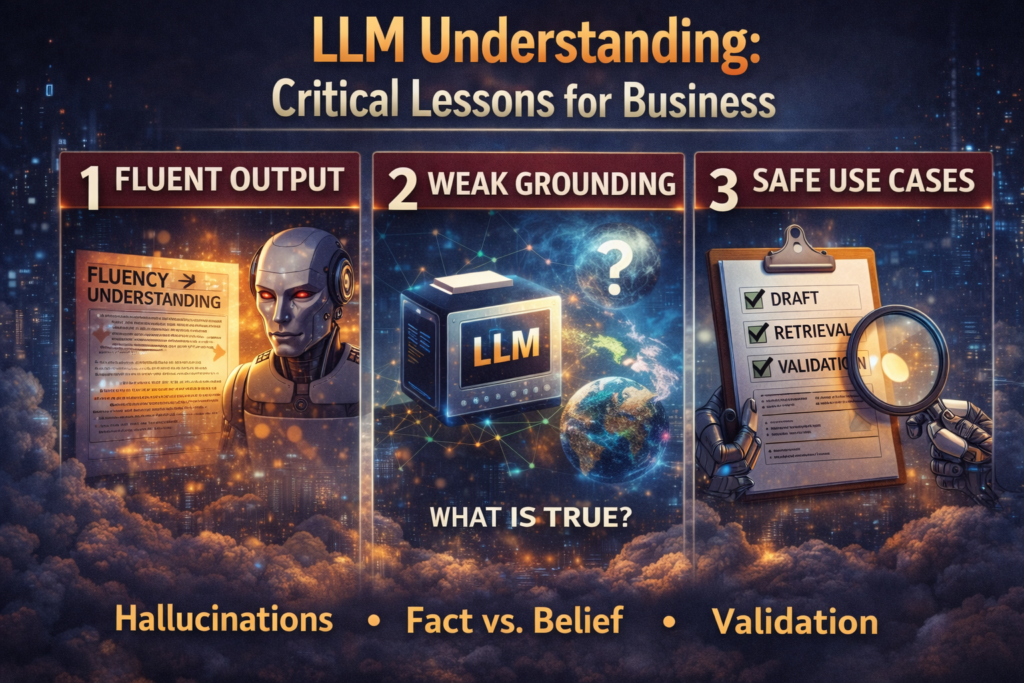
LLM Understanding: 7 Critical Lessons for Business

LLM understanding lessons for business and AI system design

Many companies deploy AI as if fluent output proves real understanding. Current research suggests a more useful mental model: LLMs are powerful probabilistic tools with limited grounding, which means better results come from constraints, retrieval, validation, and careful workflow design.

Read more

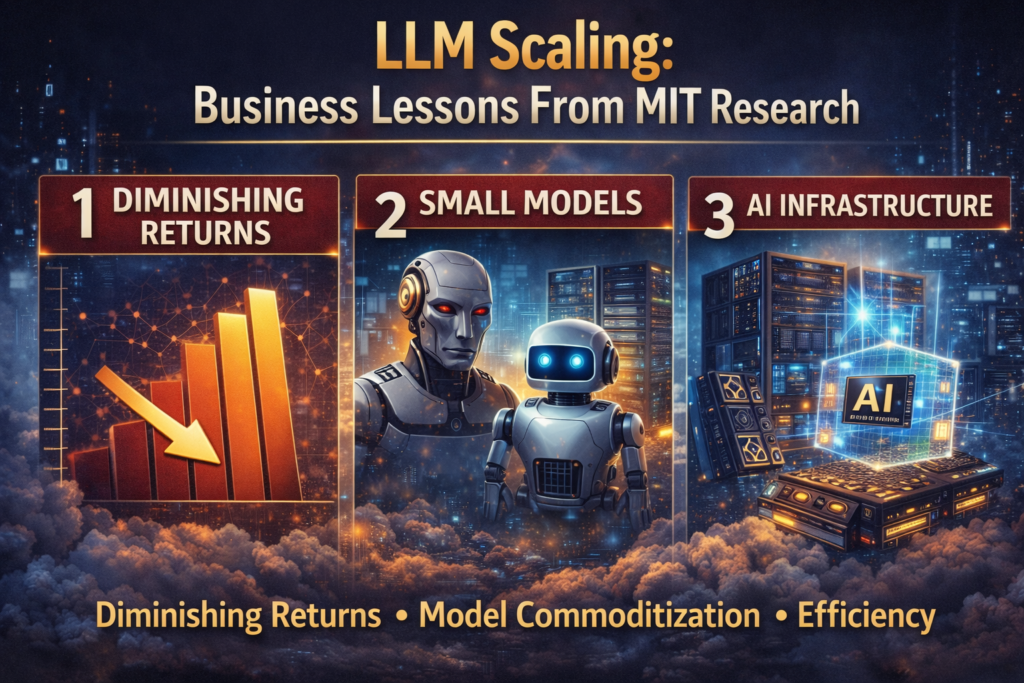
LLM Scaling: 7 Hard Lessons for Business

LLM scaling business lessons on diminishing returns and AI strategy

MIT/FutureTech research is being cited as evidence that conventional LLM scaling may be nearing diminishing returns. The stronger takeaway is narrower and more useful: brute-force compute may buy less strategic advantage over time, shifting value toward efficiency, integration, and commercial execution.

Read more

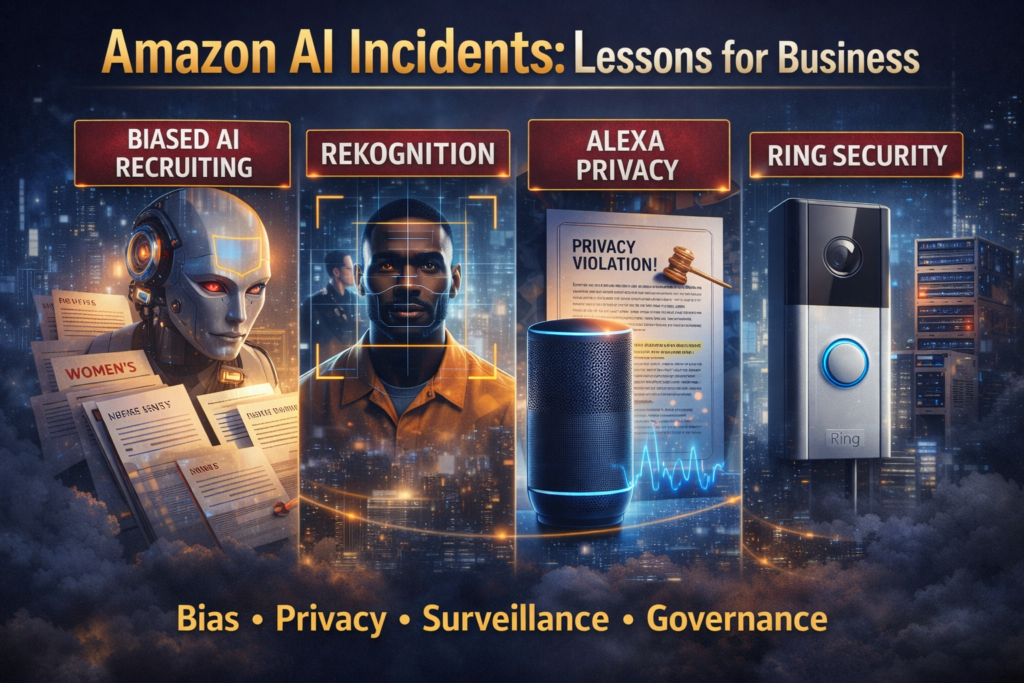
Amazon AI Incidents: 7 Hard Lessons for Business

Amazon AI incidents and business lessons on bias privacy and governance

Amazon AI incidents remain some of the clearest case studies in enterprise AI failure. From biased hiring models to privacy enforcement around Alexa and Ring, the known facts point to practical lessons about governance, deployment risk, data quality, and operational control.

Read more